Dutch authorities tested compatible toners for bromides: 4 brands exceed legal limits
June 16, 2021
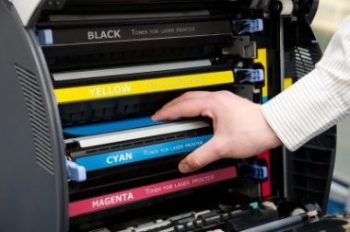
In the last few months, the Dutch health and safety regulator ILT tested 35 private label toner cartridges supplied by seven different companies sold in The Netherlands. Test results showed that four toners had levels of the illegal flame retardant bromide exceeding the legal limit, and one toner even contained lead. These toners have now been removed from the market. ETIRA learned that ILT would not conduct additional tests because they have other IT items with higher RoHS/REACH violation rates.
Although ILT did not name the brands found to be infringing, ETIRA knows that the tested products were single-use toners from Asia. In 2019/2020, ETIRA and other market players conducted similar tests. They found that no less than 7 in 8 toners tested contained flame retardant DecaBDE levels that exceeded EU health and safety levels. Following those shocking findings, ETIRA called on regulators in European Union Member States to strengthen market surveillance and test 3-rd country toners for conformity with ROHS and REACH compliance to seize these dangerous toners posing a health risk to EU consumers.
Tags
flame retardantILT
toner safety
ETIRA supports ‘right to repair’ protest
May 28, 2021
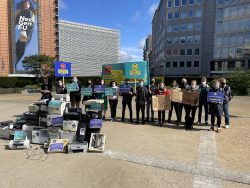
A protest which took place on the streets of Brussels this week has been praised by ETIRA for raising awareness of the right to repair.
The demonstration, organized by the European Right to Repair campaign, saw protesters pile end-of-life printers in front of the European Commission while MEPs and members of the media watched on.
The event aimed to raise awareness ‘about the Commission’s continued inaction on this iconic destined to fail product [printers]…”
The European Right to Repair campaign said: “The European Commission’s flagship Circular Economy Action Plan, adopted in March 2020, has set out to address the entire life cycle of products and tackle their premature obsolescence notably by promoting the right to repair for ICT products.
“The Commission had rightfully identified printers as a particularly wasteful product, and committed to tackle them by means of a dedicated regulatory instrument “unless the sector reaches an ambitious voluntary agreement” by September 2020.”
Commenting on the fact that nearly one year later, the discussions on the voluntary agreement have not yielded any tangible results, the campaign team added: “We need strong regulatory action now.”
Chloé Mikolajczak, campaigner for the Right to Repair campaign, added: “Printers are one of the most iconic examples of premature obsolescence and some of the least repairable products brought to community repair events. According to data from the Open Repair Alliance, only 37% of printers get repaired at events, while 33% are deemed end of life.”
Javier Martinez, President of ETIRA said: “ETIRA supports the call for a Right to Repair. Remanufacturing printer cartridges and printers is textbook reuse and could create thousands of new jobs here in Europe. It should be the no. 1 item in Europe’s Green Deal and Sustainable Product policies.”
Tags
circular economyReuse
ETIRA comment on HP’s Ambitious Climate Action Goals
April 22, 2021

| HP outlines broad plans to combat climate change focused on Carbon Emissions, Circularity and Forests Introduces partnerships to extend impact ranging from ocean conservation to forest restoration |
Goals
- Achieve net zero greenhouse gas (GHG) emissions across HP value chain by 2040, beginning with supplies business achieving carbon neutrality by 2030
- Reduce HP value chain GHG emissions 50% by 2030.
- Reach carbon neutrality and zero waste in HP operations by 2025.
- Reach 75% circularity for products and packaging by 2030
- Maintain zero deforestation for HP paper and paper-based packaging
- Counteract deforestation for non-HP paper used in our products and print services by 2030
Partnerships
- Expands HP Sustainable Forests Collaborative
- Sponsors Forest Stewardship Council’s Digital Marketplace
- Joins Ocean Conservancy’s Trash Free Seas Alliance® Steering Committee
Today, in advance of Earth Day, HP Inc. (NYSE: HPQ) announced some of the most aggressive and comprehensive climate goals in the technology industry. The commitments highlight the progress the company is making to drive a net zero carbon, fully regenerative economy, reduce its overall environmental footprint, and strengthen its business for the long term to create the most sustainable portfolio of products and solutions in the industry.
“Combating the climate crisis is an unprecedented challenge demanding action across the private and public sectors. We all have a shared stake in safeguarding our planet, and making a sustainable impact on the communities we serve must be a priority for all companies,” said Enrique Lores, HP Inc. President and CEO. “At HP, we are united in our ambition to become the world’s most sustainable and just technology company. These new goals reflect our continued efforts to drive toward net-zero carbon emissions – not just within our own operations, but across our entire value chain. It’s not only the right thing to do, but also an increasingly important driver of innovation and growth that will strengthen our business well into the future.”
The Case for Business Transformation
The measures HP is pursuing, including the targets announced today, are among the most comprehensive climate actions in the technology sector and align with relevant U.N. Sustainable Development Goals. In order to achieve these goals, HP is focused on accelerating five strategic drivers intended to decouple growth from carbon emissions and resource consumption, drive innovation, and transform design and business models:
- Print and Compute-as-a-Service: Print supplies renewal, hardware-as-a-service, certified pre-owned, hardware
- Sustainable materials: Increase use of renewable and recycled materials
- Supply chain decarbonization: Drive and support supplier carbon reduction, use of renewable electricity, and adoption of surface transportation and alternative fuels and electric vehicles for product shipments
- Energy efficiency: Design in existing and new energy-efficient product technologies
- Forest investments: Address the fiber used in printing and packaging by investing in forest restoration and protection, and continue to source certified or recycled materials
Carbon emissions and circularity
To achieve these targets, HP will be carbon neutral in its operations by 2025 and reduce Scope 1, 2, and 3 greenhouse gas (GHG) emissions by 50% on an absolute basis by 2030, compared to 2019.[vi] Additionally, 75% HP’s total annual product and packaging content, by weight, will come from recycled, renewable and/or reused materials, products and parts by 2030. HP commits to 75% of its total annual product and packaging content (by weight) to come from recycled and renewable materials and reused products and parts by 2030. These actions will help to position HP to reach net zero emissions across its value chain by 2040. In line with HP’s circularity ambitions, HP Operations will be zero waste in its managed facilities by 2025.[vii] HP’s Customer Support organization will also be carbon neutral across both HP and partner-run operations by 2030.
HP will pursue and accelerate a range of steps, including enabling a circular economy by using more sustainable materials, such as recycled plastics and metals, and investing in forest restoration and protection.[viii] Since 1991, HP has kept more than 875 million HP cartridges, 114 million apparel hangers, and 4.69 billion postconsumer plastic bottles out of landfills—instead, upcycling them to make new HP products. After introducing the world’s most sustainable PC portfolio, HP continues to innovate throughout its product portfolio and work with key partners to achieve circularity. HP is a member of NextWave Plastics, collaborating across industries to create the first global network of ocean-bound plastic supply chains. HP is also a member of the Ellen MacArthur Foundation’s Network and the Circulytics measurement tool.
HP was the first global IT company to publish its full carbon footprint and set carbon emissions reduction goals for its operations, supply chain, products and solutions. HP was among the first 10% of companies with GHG emissions reduction goals approved by the Science Based Targets Initiative, including a 1.5°C aligned goal to reduce its Scope 1 and 2 emissions 60% by 2025 compared to 2015. For two consecutive years, HP is the only technology company to have been named to CDP’s A lists for climate, forests, and water, as well as CDP’s supplier engagement leaderboard. HP has been a member of RE 100 since 2016 and EV 100 since 2017.
Reducing Carbon in HP Supplies
HP will transform its print business from a transactional model to a services model, while actively reducing the carbon footprint of its company and its products. To accelerate a transition to a net zero value chain, HP commits to carbon neutrality for its supplies business by 2030.
HP will start transitioning supplies to be carbon neutral by launching HP Instant Ink with Planet Partners pilot, leveraging recycling and new renewal capabilities to extend the life of Original HP Supplies. This pilot will help customers decrease virgin plastic used, and diminish waste, including ocean-bound plastics, on the pathway to circularity. Launching in Germany in May 2021, HP Instant Ink with Planet Partners will allow HP Instant Ink subscribers to opt-in to receive renewed cartridges. The end-to-end use of HP technology and engineering is what makes this pilot unique. The consistent reliability and outstanding print quality of Original HP Supplies mean fewer reprints and less waste.
ETIRA commented “The Voluntary Agreement’s environmental performance since 2011 has been extremely weak, and it did not facilitate cartridge reuse. If it wants to play a serious role in reducing the environmental footprint of the printing industry, it must include strong eco-design regulation, clear reuse targets for OEMs such as HP, and decisive action against polluting single-use clone cartridges.”
Tags
HPReuse
ETIRA online AGM discusses public policies supporting reuse, and decides to enhance its PR outreach
March 11, 2021

On 4 March 2021, ETIRA held its 2020 annual meeting. Due to the Covid pandemic, we were unable to hold the meeting in 2020.
The meeting kicked off with the statutory parts: the 2019 finances were approved, as was the 2021 budget. The general assembly also elected the 2021-2023 Board of Directors: Javier Martinez from Turbon Products was re-appointed as ETIRA President. Also re-elected were Gerwald van der Gijp from ARMOR (Vice-President), Jan-Michael Sieg from KMP, David Connett from Connett & Unland, Volker Kappius from Delacamp, Peter Knak from IMEX Europe and Milan Banjac from TIN Factory.
At the meeting, ETIRA members discussed the strategy of the association. The successful 2020 communication program will be continued in 2021. Members also heard a status update on the ETIRA remanufactured cartridge sticker: to allow distinction between our products and newbuilt non-OEM clones, ETIRA will develop a sticker that certifies that a cartridge carrying the sticker is a remanufactured OEM cartridge. Secretary Vincent van Dijk briefed attendees about the 2020 green public procurement criteria (GPP) for imaging equipment. Although not compulsory, the new criteria strongly recommend using remanufactured cartridges, and prohibit anti-reuse practices and tools. ETIRA members who want to sell cartridges to a public organization can use these criteria (available in all EU languages) to convince the customer to go for reuse instead of new. The meeting also heard the latest about the EU Voluntary Agreement Imaging Equipment: following strong pressure from Member States and others, the OEM’s are now looking at including reuse targets in the VA scope.
Expert Phil Sargeant of market intelligence firm IDC (UK) presented the latest industry market data.
Unfortunate the online format prevented the informal networking for which the ETIRA meetings are best-known. ETIRA hopes that we can organize a 2021 annual meeting again in the normal face-to-face format in September.
Tags
AGMETIRA celebrates lobbying win as Spanish rule change closes loophole on electrical equipment imports
January 26, 2021

The European Ink Toner and Remanufacturers Association (ETIRA) is celebrating a change to Spanish rules which mean all importers of electrical and electronic equipment (EEE) to the country must now prove their waste management credentials.
Following extensive lobbying and proposals from ETIRA, along with the Spanish office of the European Recycling Platform, a raft of rule changes around the management of Waste Electrical and Electronic Equipment (WEEE) and batteries have received royal ascent.
The royal decree modifies the current WEEE regulations, meaning all importers of EEE from third countries will be required to enter their Integrated Industrial Registry number, (WEEE registration number) when clearing imports of EEE into Spain.
The measures are introduced so that, prior to the importation of electrical and electronic equipment, Spanish Authorities can supervise and verify the correct compliance with the registration obligations in the Integrated Industrial Registry (WEEE registration) by the producers, importers or authorised representatives.
The results of the controls are carried out prior to importation and will then be transferred to the competent authorities for market surveillance.
This change closes a loophole where printer consumables could be imported, but the importer was not required to disclose the WEEE registration details. Unregistered importers would then avoid the cost of providing a WEEE collection programme and paying the appropriate costs of WEEE compliance.
Javier Martinez, President of ETIRA, the European Toner and Inkjet Remanufacturers Association said: “This is excellent news for Spanish remanufacturers and Original Equipment Manufacturers (OEMS) who have historically faced the challenge of competing with low cost imports achieved by those not contributing to the costs of WEEE, but at the same time have had to contribute to the correct processing of WEEE.
“The rule change was formulated at a meeting with ETIRA, the European Recycling Platform, Spain’s Environment ministry and Customs authorities.” Martinez added.
A third country is a country that is not one of the 27 members of the European Union and the 3 countries of the European Economic Area (Iceland, Liechtenstein, and Norway).
For further information about ETIRA and its work, visit www.etira.org
Tags
remanufacturingWEEE Regulations
ETIRA joins MEPs in calling for consumers’ ‘Right to Repair’
December 2, 2020
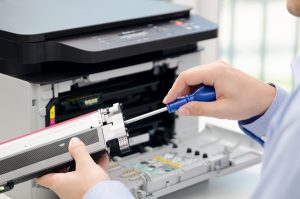
The European Toner and Inkjet Remanufacturers Association (ETIRA) has joined MEPs in calling on the EU Commission to grant consumers a ‘right to repair’, by making repairs to printing hardware and consumables more systematic and cost-efficient.
The organisation’s plea follows the European Parliament’s endorsement of Right to Repair, with MEPs voting in favour of boosting sustainability by promoting reuse and repairs, and by tackling practices that shorten the lifespan of products, adopting the resolution on a more sustainable Single Market.
Javier Martinez, president of ETIRA, said: “ETIRA welcomes the European Parliament’s endorsement of the Right to Repair. The vote marks a very positive step towards a more green and circular economy built on sustainability.
“A stronger reuse and second-hand goods market for imaging consumables can create thousands more jobs across Europe and, to see the Parliament’s call for measures to tackle practices that shorten the lifetime of a product, while endorsing sustainable production, is fantastic.
“We stand alongside the MEPs’ endorsement and call on the European Commission to make repairs more appealing and cost-efficient, whether by extending guarantees, providing guarantees for replaced parts or giving better access for consumers when it comes to information on repair and maintenance.
“It is vital that our industry is considered as a ‘hotspot’ when it comes to implementing legislation around this important topic and, also, important to ensure that new build cartridges are covered by the Right to Repair.”
ETIRA’s call comes just weeks after the organisation issued a detailed response to the EU’s draft Voluntary Agreement for Imaging Equipment.
Javier, added: “ETIRA strives for a world in which sustainable products, services and business models are the norm. Our aim is to secure greater government support for remanufacturing, reuse and recycling within the printing industry, as a key part of policies.
“Both the European Parliament’s endorsement of the Right to Repair and the draft Voluntary Agreement mark positive steps forward but more needs to be done to support our industry and reduce its environmental footprint.”
One of the main barriers to effective reuse in the imaging consumables market are firmware updates that lock out reuse products and shorten the effective life of the consumable.
Commenting on the European Parliament’s stance on this barrier, Javier, said: “We endorse the Parliament’s call for corrective updates to continue throughout the estimated lifespan of the device. Also, that corrective updates should be kept separate from evolutive updates, but both must be reversible, and updates should not dimmish the performance or responsiveness of the goods. Users must be able to quickly roll-back any update that locks out remanufactured cartridges.
“We also welcome setting up a system of mandatory labelling on consumer electronics to provide explicit information on the repairability and lifespan of products.”
Tags
printer cartridge reuserepair printer cartridges
ETIRA condemns confusing endusers regarding new vs. environment-friendly remanufactured cartridges
November 17, 2020

Using identical article numbers for both new and remanufactured Blue Angel certified cartridges can mislead customers who order green products.
Last week, German industry magazine Digital Imaging (DI) published an article(*) about cartridges from Chinese supplier Ninestar. According to DI, the large Chinese supplier has been advertising since August that it had received the ‘Blue Angel’ accreditation cf. standard RAL DE-ZU 177 for several toner modules of their G&G brand. The Blue Angel environmental certification is only awarded to remanufactured toner cartridges. DI writes that test purchases have now shown that six G&G cartridges purchased at German firm Tonerdumping in recent weeks, are however 100 % newbuilt. And even though the Blue Angel logo was not affixed on these cartridges, they did have exactly the same manufacturers’ article numbers as the Blue Angel certified cartridges.
ETIRA President Javier Martinez said: “We strongly condemn any confusion when it comes to the Blue Angel certification. Customers are being misled when they want to buy an environment-friendly product but in reality receive a single-use cartridge (“SUC’). A SUC cannot be reused but ends up in the landfill or clogs up the collection systems of remanufacturers.
Certification bodies must act fast and decisively against any confusion surrounding use of their logo. The Blue Angel eco-label is widely respected in our industry and by our customers. Remanufacturers have made great efforts to obtain the Blue Angel approval for their toners, and cannot accept that the benefits of the logo are used without doing the work for it.
ETIRA welcomes that, as reported by DI, Blue Angel has removed the G&G cartridges from their homepage. Enforcing compliance with standards is key for environmental and circular products.
Tags
remanufactured cartridgesETIRA calls for amendments to latest draft of the EU Voluntary Agreement for Imaging Equipment
October 29, 2020
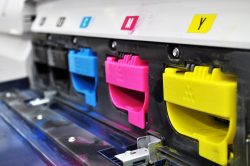
The European Toner and Inkjet Remanufacturers Association (ETIRA) has issued a detailed response calling for amends to be made to the latest draft of the Voluntary Agreement for Imaging Equipment, released by Eurovaprint earlier this month.
The association, which represents inkjet and toner cartridge remanufacturers across the EU, says it acknowledges the proposal is a ‘useful step forward’ but urges amendments to be made, outlining its suggested minimum changes.
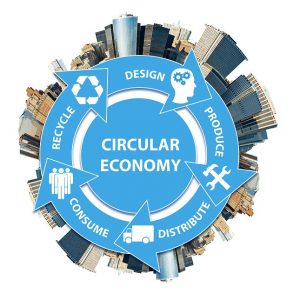
The aim of the draft Voluntary Agreement (VA) is to improve the environmental performance of imaging equipment products across the EU, through the creation of eco-design minimum requirements, supporting the EU’s Circular Economy Action Plan.
Javier Martinez, president of ETIRA, said: “ETIRA has always called for mandatory legislation to replace the Voluntary Agreement. In our view, only a mandatory approach can bring tangible and enforceable implementation of the goals defined under the Circular Economy Action Plan, because only a regulation is applicable to all market players.
“Legislation therefore continues to be our preferred option. However, ETIRA acknowledges that the October 2020 draft VA represents a useful step forward and, if the core objectives we continue to lobby for can be achieved through a more stringent voluntary agreement, ETIRA would be interested to participate and engage in the process, provided the proposal includes our suggested minimum amendments in line with EU Treaty, EU Circular Economy Action Plan and EU Eco-design directive.”
ETIRA’s suggested minimum amendments are:
- The exemptions in Articles 9.2.1, 9.4. and 9.5.2 should all be removed. Excluding cartridges under contract or subscription means that a very large part of the cartridge market is excluded from the VA, resulting in less cartridge reuse in the EU;
- A clear and ambitious re-use target for all cartridges marketed by the Original Equipment Manufacturers (OEMs) must be set: 45% within two years and 60% within four years. Without fixed targets, reuse of cartridges will not grow, in particular if contract or subscription sales are excluded;
- Transparency on the Bilateral Agreements (BAs): There is a need for equal terms. Equal volume pricing, equal technical solutions, equal product range etc. need to be offered by an OEM signatory to all supporting signatories who want to agree a BA with that OEM signatory;
- Criteria for qualifying as supporting signatory: ETIRA calls for a transparent and non-discriminatory decision-making process as to who can and who cannot become supporting signatory;
- The VA should be limited in time, e.g. maximum three-year period. During this period, the EU should prepare a regulation to replace the VA. ETIRA is happy to assist in this task;
- ETIRA asks that the VA recognizes ISO standards EN 45552 , EN 45553 to EN 45559 (resource efficiency) and also findings by the UNEP resource panel on “Value retention Processes
ETIRA will be sharing its feedback on the draft VA with all stakeholders, such as EU and Member State authorities, NGO’s etc,.
Tags
circular economyEU Voluntary Agreement
Reuse printer cartridges
New EU legislation set to hold manufacturers to account
October 13, 2020

New legislation, set to hold ink toner and printer manufacturers to account when it comes to complying with rules around substances of very high concern (SVHC) and product safety, has been welcomed by ETIRA.
The European Ink Toner and Remanufacturers Association (ETIRA) has given its approval to two new items of legislation introduced by the EU.
The first item of legislation comes into force from 5 January 2021, requiring all companies that supply products containing REACH Candidate List substances to submit information into the European Chemicals Agency’s SCIP Database.
The move affects all products on the EU market that contain a SVHC on the REACH Candidate List, with a concentration of more than 0.1% by mass.
The new legislation will make compliance efforts by manufacturers and other suppliers transparent to authorities and third parties, as well as proving particularly useful for waste processors and recyclers to determine the hazardous content in the products they process.
The second legislation item is the introduction of Market Surveillance Authorities, due to be launched in July 2021.
Introduced by the European Commission, the new regulation for market surveillance will require all products sold in the EU under Directive 2009/125/EC – whether sold directly, online or through a fulfilment service provider – to be registered with an official responsible party based in the EU.
A ‘responsible party’ can be a manufacturer, importer, distributor, fulfilment service provider or ‘authorised representative’.
Javier Martinez, president of ETIRA, said: “We are pleased to see these two items of legislation set to come into force across the EU within the next 12 months.
“Knowing who placed products on the EU market is key to holding suppliers and manufacturers to account when it comes to compliance with hazardous content and market surveillance. Earlier this year, two studies showed that many products, including cartridges, that are sold over the internet directly to end users, contained illegal and hazardous chemicals. The new legislation provides tools for the national authorities to ban products at the EU border and impose penalties on companies offering infringing products on the EU market. Online platforms will be required to fulfil the same obligations as other importers and will no longer be able to dodge their responsibility and liability for products offered on their websites etc.
In the coming months, ETIRA and its members will signpost the authorities to online platforms and other “orphan’ cartridges that fail to comply with the new rules.
The two reports mentions are:
ETIRA report: https://www.etira.org/posts/etira-cautions-that-recent-toner-emission-tests-reveal-a-100-failure-rate/
European Chemicals Agency report: https://echa.europa.eu/-/1-in-4-imported-products-found-to-be-non-compliant-with-reach-and-clp For further information about ETIRA and its work, visit www.etira.org