ETIRA welcomes EU’s new Green Procurement Policy (GPP) Criteria for Imaging Equipment tenders
September 14, 2020
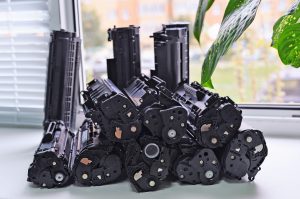
- The European Toner and Inkjet Remanufacturers Association (ETIRA) has welcomed the EU’s new GPP policy, after more than two years of lobbying
- The association and its members will now raise awareness of the new criteria across the EU Member States
ETIRA, the European Toner and Inkjet Remanufacturers Association, has welcomed new criteria introduced by the EU to reduce the environmental footprint of printers and cartridges purchased through public tenders.
The new Green Procurement Policy (GPP) Criteria for Imaging Equipment applies to printers, copiers, multifunctional devices and scanners, enabling public authorities to endorse sustainable printing by lowering the environmental impact of devices purchased, and favouring the use of remanufactured cartridges.
The new criteria, which also includes requirements for printers’ plastics, chemicals and emissions, have been in development by the EU’s scientific body – the Joint Research Centre (JRC) – since 2018, and the list was approved by the EU Commission in late July 2020.
Public bodies are being invited to use the guide, which is currently voluntary, when they solicit offers for imaging equipment and consumables through tenders.

Javier Martinez, president of ETIRA, said: “The introduction of this new list of criteria within the European Union is an encouraging step forward towards a more sustainable future for the printing and ink and toner cartridge industry.
“We have been lobbying the EU for two years on this policy and participating in the development process while insisting that cartridge reuse is a vital part of the new criteria.
“By including a clear preference for remanufactured cartridges in the 2020 GPP criteria, the EU confirms that in terms of environmental performance, reusing your cartridge is better than buying a new one each time.
“Together with our members, we will now raise awareness of the criteria in EU countries to encourage public authorities to use the GPP criteria and in turn, lower the environmental footprint of printing and cartridge use across EU member states.”
The GPP is made up of two elements – ‘core criteria’ designed to allow for easy application, focusing on the environmental performance of a product, and ‘comprehensive criteria’ for use by authorities that want to lead the way in supporting innovative environmental goals.
Key takeaways from the new policy are outlined below, with the full criteria available here.
- Printers must comply with EU regulations on REACH (Registration, Evaluation, Authorisation and Restriction of Chemicals) WEEE (Waste Electrical and Electronic Equipment Directive) and other regular EU rules and laws.
- Printers must meet standards for emissions, noise, energy consumption, and not contain hazardous substances beyond limits.
- They must offer warranties and allow the use of remanufactured cartridges and any firmware update must not hinder the use of reused or remanufactured consumables.
- Take-back programmes are also requested, and there are criteria for consumables supplied under a managed print contract. Cartridges must comply with page yield standards and must not be designed to limit the ability to reuse or remanufacture them.
The GPP criteria also encourages an initial ‘fleet assessment’ to determine which machines need to be replaced and crucially, which ones can be kept, which will offer increased opportunities to reuse both cartridges and machines.
Tags
Green Procurement PolicyImaging Equipment
printer cartridge reuse
HP firmware update: ETIRA urges HP to change course and take ‘path of sustainability’
July 29, 2020
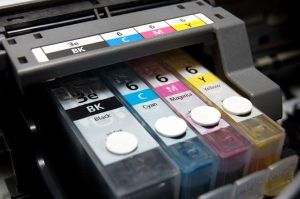
The European Toner and Inkjet Remanufacturers Association (ETIRA) is urging HP to rethink its latest printer firmware update.
The update, version 2025A/2021B – released in July 2020 – affects HP OfficeJet 5220, 5255, 5230, 5232, HP ENVY 5020, 5032 and HP DeskJet 2621 devices.
In the past, similar updates have blocked out reused HP cartridges across the globe, causing significant financial damage to end-users, resulting in many claims against HP. ETIRA is hoping to avoid a similar situation again.
Javier Martinez, president of ETIRA, said: “It is quite clear that HP printer owners using reuse cartridges who update the firmware, may find that their cartridges no longer work, and this is down to HP. Its printers use something called ‘dynamic security’, which recognises cartridges that aren’t HP branded and stops them from working and this is unacceptable for a variety of important reasons.
“Firstly, the result of the overnight change is that reuse/remanufactured HP cartridges no longer function in the printer in which they are installed, and they may render remanufactured stock cartridges useless. End-users can no longer print, and this is especially painful in the current COVID-19 environment, where many are forced to use home printers to do their job.
“Secondly, the resulting higher volume of non-working but full cartridges exponentially increases waste treatment risks, as treatment plants are designed to process empty cartridges, not full ones.
“And finally, but most important: this approach has an unnecessary and negative environmental impact as good products are wasted prematurely and unnecessarily. Reuse of a cartridge several times, followed by recycling its base materials is by far the preferred option as it reduces CO2 emissions by up to 45%-60%, and saves energy and natural resources.
“Our members will hold HP responsible and liable for all damages occurring from this update and under the new EU Circular Economy Action plan mandate and existing waste regulations, HP may find that its actions are considered an environmental offence.”
ETIRA has mentioned this issue to HP on numerous occasions but so far to no satisfactory conclusion. The association has now again written to the firm, raising its concerns.
Javier Martinez added: “HP’s printer cartridges business model is the opposite of sustainability, forcing end-users to buy a new cartridge each time instead of reusing it several times. It also renders reuse cartridges useless without cause and goes against the new EU policy to become carbon-neutral and promote reuse EU-wide.
“On behalf of our members and all those across Europe who use reusable cartridges, we urge HP to abandon this strategy of creating pollution and take the path of sustainability instead which will allow consumers and third parties to easily reuse HP cartridges without being hindered by unnecessary firmware updates that block out remanufactured HP cartridges.”
Tags
HPInkjet cartridges
remanufacture
Reuse
ETIRA and member firm Armor podcast promoting cartridge reuse
July 3, 2020

In June, ETIRA joined hands with our member firm Armor during a 1 hr podcast Dutch language broadcasted live on Dutch radio station New Business Radio. Armor’s Frans Hondmann and ETIRA’s Vincent van Dijk highlighted the benefits for end-users of reusing cartridges. We raised awareness about the lower CO 2 emissions and use of natural resources. We also informed the listeners about the unfair barriers to reuse erected by printer manufacturers, and about the risks when buying cheap non-OEM newbuilds from Asia that pollute the environment and endanger your health.
Tags
ArmorETIRA
Frans Hondmann
New Business Radio
Vincent van Dijk
Leaving the OEM logo on a remanufactured OEM cartridge:

Remanufacturers often put the question: is it allowed to leave the OEM logo on the remanufactured cartridge?
ETIRA recently commissioned a legal opinion to answer this question and the answer is set out in our 20 page analysis which is available exclusively and free of charge, to ETIRA members. If you have not received your copy please contact the secretariat at info@etira.org.
Tags
LawOEM Labels
COVID-19: Slowdown affecting remanufacturing

Since the start of the pandemic, many remanufacturers across Europe have experienced falls in sales. For some the damage was very severe, for some it was relatively limited. Some even experienced an increase in parts of their business: thanks to the large number of employees now forced to work from home, sales of certain products (inkjets) saw double-digit growth. Part of that growth may well prove to be permanent. Setbacks were the firmware updates that some OEM’s continue to implement.
Also at ETIRA, the pandemic caused a slowdown in activities, as you will have noticed the low frequency of this Newsletter. But that was not only due to the pandemic: as part of our new PR and media strategy, ETIRA is making more use of other channels than just this Newsletter for its outreach.
Behind the scenes, the ETIRA Board of Directors remained very active. The main topic is the 2020 EU’s Action Plan on the Circular Economy. Here the multi-annual ETIRA lobby efforts again paid off 100%: the programme announces legislation to promote circularity for IT products, including printers and cartridges unless an ambitious Voluntary Agreement Imaging Equipment is agreed in the next few months. The Board also discusses leaving the OEM logos on remans, a new ETIRA logo’ distinguishing remanufactured cartridges from non-OEM newbuilds, PR work, etc.
Tags
Covid-19remanufacturing
ETIRA cautions that recent new build Toner Emission Tests reveal a 100% failure rate
April 14, 2020

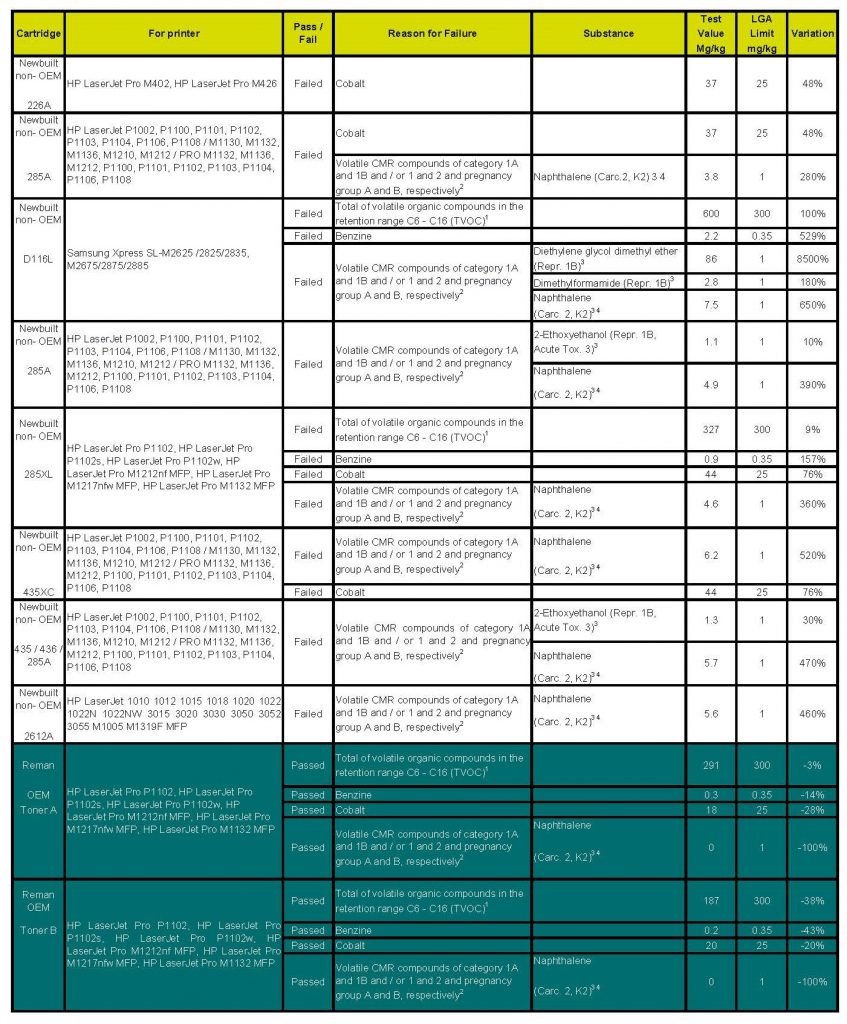
Imported non-OEM new build cartridges sourced in Europe were tested by the LGA and 100% failed, underlining again that such products are a threat to our health and the environment.
As part of its product safety remit, ETIRA recently purchased on Amazon and then commissioned the testing of three non-OEM new build toner cartridges by Germany’s expert LGA test centre. Additionally, five further tests by the LGA were commissioned by other industry players concerned about product safety. The result was stunning: All eight new non-OEM newbuild cartridges failed the LGA emissions tests for multiple reasons. By contrast, a test of two toners widely used by European remanufacturers passed the LGA emissions test.
(Full details of the tests can be downloaded here).
The range of failures included excessive levels of cobalt, benzene and naphthalene. Four cartridges had levels ranging from 37 to 44 mg/kg of cobalt, which according to the European Chemicals Agency harmonised classification and labelling (CLP00) approved by the European Union ECHA), may cause long lasting harmful effects to aquatic life, may cause an allergic skin reaction and may cause allergy or asthma symptoms or breathing difficulties if inhaled.
Benzene was also detected at a level of 0.9 mg/kg, 157% above the LGA threshold of 0.35 mg/kg. The ECHA classification states that Benzene may be fatal if swallowed and enters airways, may cause genetic defects, may cause cancer, causes damage to organs through prolonged or repeated exposure, is a highly flammable liquid and vapour causes serious eye irritation and causes skin irritation.
Naphthalene was present in seven of the tested cartridges at a level of between 3.8 and 7.5 mg/kg, between 280% and 650% above the LGA test threshold of 1.0 mg/kg. According to the ECHA classification, this substance is very toxic to aquatic life, with long lasting effects, is harmful if swallowed and is suspected of causing cancer.
One test cartridge contained 86 mg/kg of Bis(2-methoxyethyl) ether, which is more than 8500% above the LGA test threshold of 1.0 mg/kg. According to the ECHA classification, this substance may damage fertility and may damage the unborn child and is a flammable liquid and vapour.
In the past, toner powders extensively used in the European remanufacturing sector have been tested by the LGA and they easily passed this stringent emissions test.
As the European Union moves towards a circular economy, one of the key goals will be addressing the presence of hazardous chemicals in products. Javier Martinez, President of ETIRA said “ These tests show that very often it is dangerous to buy newbuild non-OEM cartridges: by offering products containing dirty toners, traders are playing with the health of their customers. The current coronavirus pandemic will heighten the awareness and need for the products we use to be safe and reliable, and at the same time the standards required for CE and other certifications applied to goods entering the EU must be rigorously checked.”
- TVOC = total volatile organic compounds in forming the corresponding totals. all individually quantified components are included with a mass-based emission rate of ≥ 0.3 mg/kg. Insofar as possible concentrations of all individual compounds are quantified against authentic standard. Unidentified substances are quantified on basis of substance groups against substance-like compounds from this group.
- CMR = carcinogenic (C). mutagenic (M). toxic to reproduction (R) classified according to the EU classification with reference to Annex VI of Regulation (EC) No.1272/2008 (GHS) of Categories 1A and 1B and according to the national classification in compliance with TRGS 905 or the MAK and BAT Value Lists of the DFG (German Research Foundation). (Categories 1 and 2 and Pregnancy Group A and B).
- According to the EU classification with reference to Annex VI of Regulation (EC) No. 1272/2008 (GHS)
- According to the MAK and BAT Value Lists of the DFG (German Research Foundation). (Categories 1 and 2 and Pregnancy Group A and B).
Tags
LGANew Build
Toner
ETIRA welcomes the forthcoming EU Circular Economy Action plan
February 10, 2020

Draft paper on EU Circular Economy Action Plan announces regulatory measures on printers and consumables in Eco-design Directive promoting circularity in energy-related products.
Brussels, 10 February 2020 – A draft Communication from the EU Commission on the EU Circular Economy Action Plan says that as a priority, regulatory measures for printers and consumables such as cartridges, will be included in the EU eco-design Directive promoting circularity in energy-related products (2020-2024 Working Plan).
ETIRA acknowledges the strong determination and congratulates the EU Commission and the member states to speed up and advance the circular economy, for a cleaner and more competitive Europe, something that has been in ETIRA’s DNA since it was created.
Javier Martinez, President of ETIRA, commented on the draft proposals. “Waste prevention, green jobs creation and climate change defence actions, are all well addressed in the draft plan. We are pleased that following ETIRA’s long term campaign, we now see printers and cartridges as one of the priority eco-design actions for the EU. This is something ETIRA has been asking for quite some time, and ETIRA is fully committed to it!
The plan represents a huge opportunity to rebalance the market, which up to now has been challenged because of imported non-compliant products.
As Europe transitions from a linear to a circular economy model, it is crucial that all parties move forward together, and that the doors to Europe are closed to infringing products.
ETIRA continues to support and makes every possible effort to transition to a Circular Economy, which empowers consumers, enables real reduction of waste, delivers a cleaner Europe, and generates new green jobs” .
ETIRA responds to Actionable Intelligence White Paper
November 20, 2019
ETIRA responds to the recently published white paper that charts how a premium new build Single Use Cartridge is poised to change the printer supplies market.
Recently US research firm Actionable Intelligence published a free white paper “Premium Compatibles Poised to Fundamentally Change Third-Party Printer Supplies Market” this white paper charts the evolution of the premium compatible cartridge and its potential impact on the market.
ETIRA was disappointed by the biased content of the Actionable Intelligence white paper, assuming that the viewpoint taken may have been influenced by the party or parties commissioning this work.
The focus of the report, praising the advantages of non-infringing SUC (single-use-cartridges), is based on price and IP or regulatory compliance, for which there is a legal requirement and so this is not considered to be a unique selling point. Other aspects such as quality, emissions, health, safety and economic sustainability are seemingly not considered relevant enough to be highlighted in this validation.
In cartridge tests which ETIRA has conducted in the past, we have found violations of chemical legislation and European law apparently across the board of SUC manufacturers, also including leading brands.
We assume that for advanced players it will be possible to manufacture chemically safe, legislation and IP compliant products as stated in the White paper.
But this will come at a cost. Not only at a monetary cost for the buyer but also at a cost for society and the environment.
That SUC manufacturers pay these costs for compliance has not always been the case in the past and has yet to be proven.
That our society would be paying the price for an increased share of SUC and a further reduction of locally remanufactured product is a fact. It is not just that plastic waste ends up in landfill, but also the loss of local jobs and the unsustainability of the supply chain that are clear and negative factors of SUCs.
According to the European Parliament remanufacturing represents the “Actual mandate of society and the most important innovation need towards the future.”
We are convinced that the authorities and end-users in the EU and elsewhere will continue to increasingly demand environmentally sustainable, society friendly, high-quality and low-priced printing consumables which are remanufactured locally.
For further facts and assessment, we recommend reading a compelling and highly informative document produced under the EU commission mandate which supports our standpoint:
The cartridge remanufacturing study by Oakdene Hollins which you can download here.”
Tags
premium compatiblesremanufacturing
single use cartridge
Reusable chips on cartridges
October 17, 2019


ETIRA welcomes Brother Industries’ efforts on eco-design and environment, by allowing easier cartridge reuse
ETIRA, the European Toner and Inkjet Remanufacturers Association welcomes, recognizes and congratulates Brother Industries on its latest strategy and action in favour of a cleaner Europe, and endorsing cartridge remanufacturing as a top priority.
Brother has fitted chips on recent cartridge models, and although the independent cartridge remanufacturing industry initially feared these chips would hinder and obstruct remanufacturing of the cartridge (like chips from most OEMs do!), this is not the case with these particular Brother chips. When these cartridges run empty, their chips can be easily reused time and time again. And while this chip protects Brother’s IP -rights, it does not obstruct remanufacturing of the cartridge by independent cartridge remanufacturers.
In ETIRA’s view, this Brother strategy represents a key milestone in the fight against single-use cartridges (“SUCK”s as they are known in the market), and addresses the needs of our society which calls for product reuse and meets the European Directive on Eco-Design.
It also represents a major step forward into applying the “4R”- hierarchy, which places preparation for reuse and remanufacturing above other options like mere recycling of the materials, incineration or landfill.
ETIRA calls on all other printer manufacturers and the European authorities to follow the example set by Brother. Chips can enhance cartridge functionality but must never hinder cartridge reuse.
We also ask for EU-wide mandatory and increasing minimum reuse thresholds for cartridges. This is what some EU member states, that are truly aware of the damage that single-use plastic cartridges represent to the European environment, are already calling for.
Cartridges are WEEE, electronic waste, and as such their preparation for reuse is the top priority, as WEEE account for 70% of toxicity on waste.
For this, there should be an obligation on printer manufacturers to share data with 3rd parties under a license agreement, similar to the arrangements existing in the car industry where manufacturers are obliged to supply independent 3rd party repairers all information they require to do maintenance and repair of all vehicles, including software, parts catalogues, manuals, etc.